Navigating the Communication Labyrinth: Mastering Email, Text, and Social Media Interactions
- John Mayo
- Apr 4
- 5 min read
Updated: May 9
You send a quick message, expecting a simple reply, but instead, you get silence or a confusing response. Sound familiar? Digital communication has transformed how we connect, making it faster and more convenient, yet often more confusing. Without tone, body language, or immediate feedback, your words can be misunderstood. A simple “Okay.” might seem neutral to you but feel annoyed or dismissive to someone else. This post will guide you through the challenges of email, text, and social media communication, helping you express yourself clearly and avoid common pitfalls.
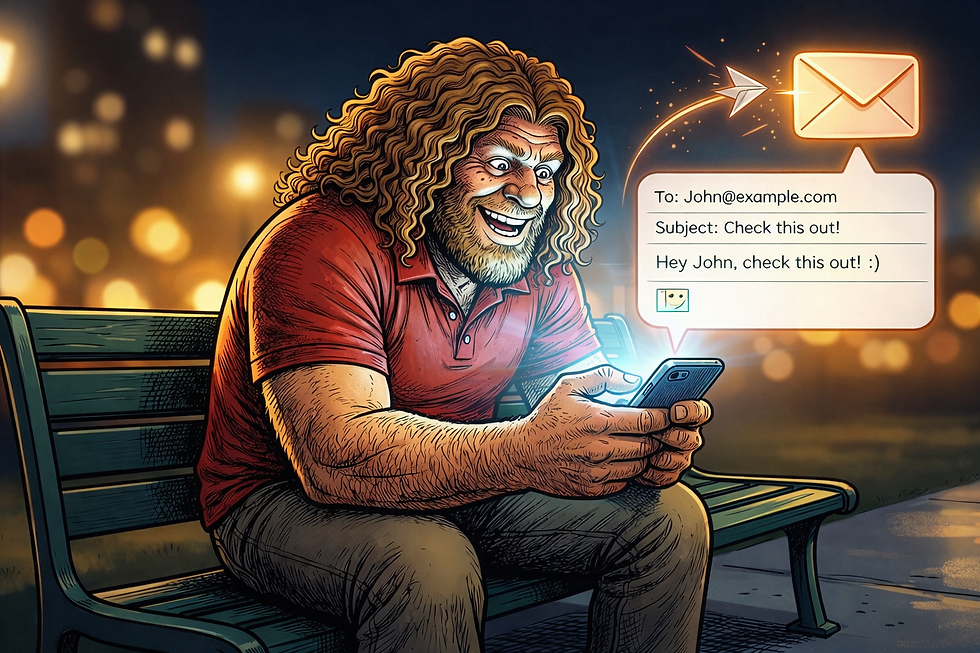
Understanding Email Communication
Email remains the go-to for professional and formal communication. It gives you space to organize your thoughts, be clear, and set the right tone. But writing a good email is a skill that requires balance.
What Makes an Effective Email?
Clear subject line: It should summarize the purpose so the recipient knows what to expect.
Respectful tone: Even when addressing issues, keep your language polite and professional.
Direct purpose: State your main point early to avoid confusion.
Concise content: Avoid long paragraphs; break information into digestible chunks.
Warmth: A friendly closing or a simple “Thank you” can soften the message and build rapport.
Common Email Mistakes to Avoid
Sending long, cluttered emails that overwhelm the reader.
Using vague language that leaves the recipient guessing your intent.
Ignoring the importance of proofreading, which can lead to embarrassing errors.
Overusing all caps or exclamation points, which can come across as shouting or overly emotional.
Example
Instead of writing:
“I need the report ASAP!!!”
Try:
“Could you please send me the report by the end of the day? Thanks!”
This sounds polite and clear, reducing the chance of misinterpretation.
The Fast-Paced World of Text Messaging
Text messages are casual and quick, perfect for short updates or confirmations. But their speed and brevity can cause misunderstandings.
Why Texting Can Be Tricky
Lack of tone and context makes it easy to misread emotions.
Autocorrect errors can change the meaning unexpectedly.
Delayed replies might be seen as ignoring or annoyance.
Short messages like “K” or “Okay.” can feel dismissive.
Tips for Better Text Communication
Keep messages simple and direct.
Avoid complex or emotional topics via text.
Use emojis sparingly to add tone but don’t rely on them entirely.
If a conversation feels tense, suggest a phone call or face-to-face talk.
Example
If you get a one word reply like “Fine,” instead of assuming negativity, consider the context or ask for clarification:
“Just checking, is everything okay?”
This opens the door for honest communication.
Social Media: Speaking to Many at Once
Social media adds complexity because you’re often addressing a broad audience, not just one person. Your words can be seen, shared, and interpreted in many ways.
How to Communicate Clearly on Social Media
Know your audience and tailor your message accordingly.
Be mindful of tone since sarcasm or jokes can be misunderstood.
Avoid controversial or sensitive topics unless you’re prepared for varied reactions.
Use visuals or formatting to support your message and make it easier to understand.
Managing Reactions and Feedback
Expect diverse opinions and be ready to respond calmly.
Don’t engage with trolls or negative comments aggressively.
Use private messages for personal or sensitive conversations.

Bringing It All Together: Practical Strategies
You can master digital communication by applying these principles across email, text, and social media:
Pause before sending: Review your message for clarity and tone.
Match the medium to the message: Use email for detailed or formal communication, text for quick updates, and social media for broad sharing.
Ask for feedback: If unsure how your message was received, check in with the recipient.
Practice empathy: Consider how your words might feel to others.
Real-Life Scenario
Imagine you need to reschedule a meeting. Here’s how you might handle it in each medium:
Email: “Subject: Meeting Reschedule Request. Hi [Name], I hope you’re well. Due to a scheduling conflict, could we move our meeting from Tuesday to Thursday? Please let me know if that works. Thank you!”
Text: “Hey, can we move our meeting to Thursday? Let me know if that’s okay.”
Social Media (if relevant): Posting a group message or event update with clear new details and a polite note about the change.
Final Thoughts on Digital Communication
Digital communication tools have made connecting easier but also more complex. By understanding the strengths and limits of email, text, and social media, you can express yourself clearly and avoid misunderstandings. Remember to be clear, concise, and considerate. When in doubt, choose the right channel and add a touch of warmth. Your message will not only be heard but also understood.

Neo is the voice behind MindFuse Academy an AI-driven guide built to cut through the noise and get straight to what actually matters.
He’s not here to waste your time. He’s here to help you think clearer, communicate better, and stop overcomplicating things that should be simple. With a tone that’s equal parts sharp, calm, and slightly sarcastic, Neo breaks down real-world topics like communication, business, and human behavior into ideas that actually stick. No fluff. No jargon. Just clarity. He sees what most people miss the gap between what you think you’re saying and what others actually hear. And he’s here to fix that. Each episode, Neo walks you through the chaos of modern thinking and helps you reconnect with something simple, powerful, and often overlooked: The ability to say what you mean and mean what you say.

Reader Questions: Digital Communication
Digital communication… where a single word can spark confusion, mild panic, or a full emotional spiral all without anyone actually saying anything out loud . Let’s see how you’re navigating this maze.
So when you send an email, are you clear and professional… or writing a novel that requires snacks and a break halfway through? And your subject lines do they inform the reader… or look like “Hey” and leave everyone guessing what they’re about to open?
Let’s talk tone. When you type “Okay.” do you mean neutral… or are you unintentionally starting a silent feud? And those exclamation points are you adding warmth… or slowly turning your message into a high-energy crisis?
Now texting. When someone sends you “K,” do you:
Accept it peacefully
Overanalyze it for the next 20 minutes
Immediately assume something is wrong
Be honest… we already know.
And autocorrect has it ever completely betrayed you and turned a normal message into something… deeply concerning? Did you fix it… or just hope no one noticed?
Let’s discuss response time. When someone doesn’t reply right away, do you assume they’re busy… or jump straight to “I have been ignored, this is the end”? And when you don’t reply, is it because you’re busy… or because you opened it, forgot, and now it’s too late to respond without looking suspicious?
Now social media. When you post something, are you communicating clearly… or hoping people interpret your sarcasm correctly (they won’t)? And when someone disagrees with you, do you respond calmly… or feel the sudden urge to write a paragraph that starts with “Actually…”?
Let’s get real about one thing choosing the right platform. Do you:Use email for detailed communication, text for quick updates, and calls for important conversations or send a long emotional paragraph via text and wonder why it went wrong
And finally…
Are you communicating clearly…or just launching messages into the digital void and hoping for the best?
Don’t forget to provide your answers in the comment box below!


Comments